
Why Web Gaming Is the Most Overlooked Channel in Digital Marketing
Let's talk about the channel nobody's talking about.
Not TikTok. Not influencers. Not programmatic display. We're talking about web gaming - the thing your brand probably dismissed as a 2003 Flash game relic - and it's quietly become one of the most powerful tools in digital marketing.
Here's the uncomfortable truth: while brands are bidding up CPMs on channels that people actively tune out, there's a massive audience already in a high-attention, high-engagement state... sitting in a browser window. No app. No download. No login. Just tap and play.
That audience isn't small. The global web gaming market is on track to hit over $3 billion by 2028. Poki, just one web gaming platform, reports over 100 million monthly active users. That's not a niche. That's a media channel.
So why is almost nobody talking about it?
The Gaming Assumption That's Holding Brands Back
When most marketers hear "gaming," they picture one thing. Console. Maybe Fortnite. Maybe a mobile app. And from there, the mental math goes: complex integration, long lead times, unclear ROI, too niche.
That assumption is wrong - and expensive.
Gaming isn't a single channel. It's an ecosystem. Console, PC, mobile, esports, user-generated worlds, and yes, browser-based web games. Each one serves a different context, a different moment in someone's day, and a different marketing objective.
Treating all of gaming as one media buy is like treating "screens" as a single media buy. The brands that lump it all together end up spending on the loudest formats while completely missing the ones that actually perform.
Web gaming gets skipped - not because it doesn't work, but because marketers haven't updated the mental image.
The Attention Problem That Web Games Solve
Here's the inconvenient reality of digital advertising: most people aren't watching.
They're scrolling. Skipping. Second-screening. The average digital ad gets a fraction of a second of attention before disappearing into the noise. You're paying for impressions that barely register.
Games are different.
McKinsey research found that 75% of players report high focus when playing PC or console games, and 55% when playing mobile. That's attention on par with a live event - not a social feed, not a podcast playing in the background. A live event.
Web games sit in that same attention state. When someone is playing, they're in it. Even a casual 3-minute puzzle game captures the kind of focused, voluntary engagement that most digital channels can only dream about.
And that engagement translates directly into brand outcomes. A Google/Kantar study across the US, India, and Brazil found that 76% of web gamers play specifically to relax and escape - they're in a positive, receptive mindset. Not defensive. Not skeptical. Just present.
That's the emotional context brands actually want.
Who's Actually Playing Web Games? (It's Not Who You Think)
 Web gaming fits into the micro-moments of everyday life - commutes, breaks, downtime
The same Google/Kantar research found that 42% of all online gamers played a web-based HTML5 game in a single month - almost on par with PC gaming (48%) and console (47%). The audience breaks into three distinct groups:
- Serious gamers (49%): Younger, male-skewed, 7+ hours a week across platforms. They want strategy, action, arcade - and they play web games as part of a broader gaming diet.
- Light gamers (40%): Roughly gender-balanced, spread across 16–54 year olds. Puzzle, word, strategy. Half prefer smartphones. Not hardcore - consistent.
- Pure web gamers (11%): Play only web games. Card, puzzle, word. Low hours, casual vibe, no interest in downloading anything. These people simply don't exist in other gaming channels.
That last group is the one most brands never reach. No app, no console, no ad on Twitch. Web games are the only door in.
And over half of serious and light gamers play H5 games at least once a day. This isn't a casual dip - it's a daily habit.
The Zero-Friction Superpower
Here's what makes web gaming genuinely different as a marketing vehicle: there is no barrier to entry.
No app store. No account. No loading screen while a 2GB file downloads. Someone scans a QR code on a bag of chips, and 3 seconds later they're playing a branded game. That's it.
In a digital world where every platform wants an install, a login, and ideally a subscription, that frictionless experience is increasingly rare - and increasingly valuable.
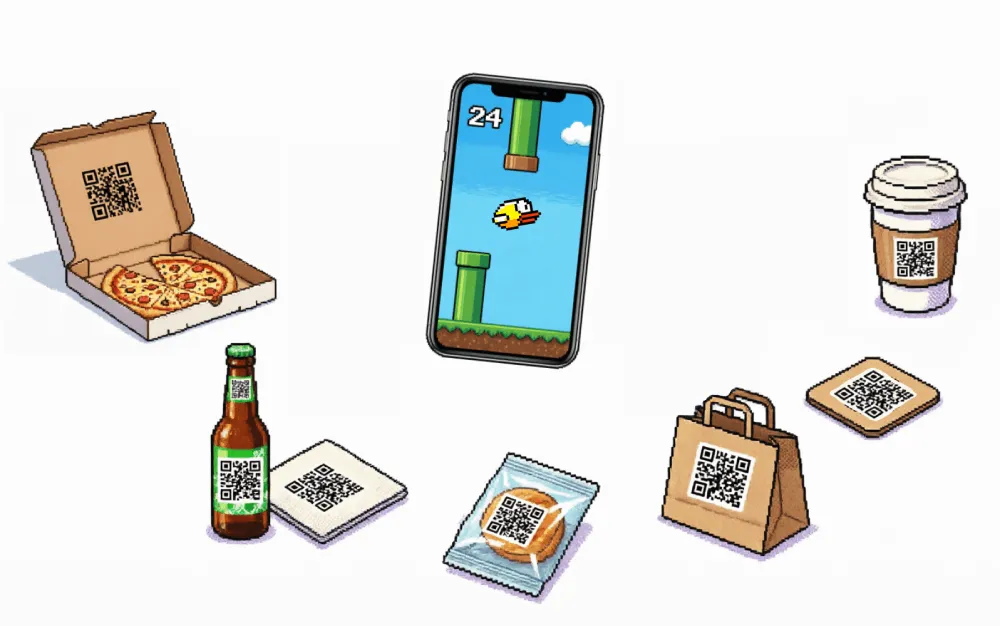 Scan. Play. Capture. QR packaging games are one of the highest-conversion touchpoints a CPG brand can run.
This is exactly why web-based branded games work so well for specific marketing jobs:
- QR packaging engagement: Instant play directly from the product. No friction between "I'm curious" and "I'm playing."
- Trade show lead capture: Someone at a booth taps a tablet, plays a game, submits an email to claim their score. Done.
- Product launch buzz: A shareable branded game goes out on launch day. No app to download, no reason not to try it.
- Email capture campaigns: Play to enter. No form fills that feel like homework.
The mechanic that made Candystand pull 11 million monthly users back in the dial-up era - just show up and play - is even more powerful now. Because now the rest of the internet got complicated, and web games stayed simple.
The Brand Opportunity Hidden in How People Play
Web gamers aren't just playing. They're in a mental state that's unusually receptive.
They're not stressed. They're not in task mode. They chose to be there. The Google/Kantar data gets specific about what keeps people playing:
- 74% stay because of immersive gameplay - engaged, not just passing time
- 57% stay for connection - social and competitive elements extend sessions
- 54% stay for achievement - progress mechanics create return visits
For brands, this is the roadmap. Build a game that delivers on those three things and you don't just get a one-time interaction - you get repeat visits, longer sessions, and a growing audience of people who associate your brand with something they genuinely enjoy.
One stat that should stop every brand marketer in their tracks: 71% of web gamers say they'd download the full app version of a game they enjoy. Web gaming isn't just a standalone channel - it's a top-of-funnel mechanism that can drive deeper product adoption downstream.
Ads That Don't Feel Like Ads
Here's where it gets really interesting for marketers.
Most digital advertising is adversarial. The user wants to get through the ad; the brand wants them to watch it. Everyone loses.
Gamers are different. They've already accepted the deal. The Google/Kantar research found that 58% of web gamers don't mind ads if they're relevant. More tellingly, 70% will watch an ad to get in-game rewards - extra lives, power-ups, bonus rounds.
That's not passive tolerance. That's active participation.
Placement matters more than most people realize. Gamers strongly prefer ads at natural breaks - start screens, end screens, between rounds. What they won't tolerate: pop-ups that interrupt flow, or anything that makes the site feel unsafe.
The takeaway for brands isn't complicated. Get the timing right, make it feel like part of the game rather than a disruption to it, and your ad goes from something people endure to something they opt into.
For branded games specifically - where the entire experience is the brand - this isn't even an issue. There's no ad to tolerate. There's just the game.
What This Looks Like in Practice
This isn't theoretical. Here's how playable marketing maps to real business objectives:
 A booth game does what a brochure never could: it makes people stop, stay, and hand over their contact details willingly.
CPG / DTC brands can turn a packaging QR code into a 3-minute branded game that captures an email, rewards a purchase, and gives customers a reason to come back - without begging them to "like, comment, and tag." That's a growth funnel. That's owned data. That's time with your brand, voluntarily given.
B2B and event brands can replace the bowl-of-business-cards trade show experience with a booth game that drives foot traffic, captures leads mid-play, and gives people a reason to remember you over the 40 other vendors selling the same thing.
Product launches can have a shareable, playable moment that travels further than a press release and creates brand memory that a banner ad never could.
In every case, the game isn't decoration. It's the mechanism. It's doing the marketing job.
The Brands That Move Now Win Later
The web gaming opportunity solves the operational problems that slow broader gaming adoption. Familiar buying models. Familiar measurement. Familiar creative formats. But in an interactive environment, with a deeply engaged audience, on a channel that most competitors are ignoring.
The brands that treat web gaming seriously today are building something the rest of the market is still figuring out. First-mover advantage in a channel that's growing fast, underpriced, and sitting right there in the browser is a real thing.
Candystand figured this out in 1997. Wrigley built an 11-million-user branded arcade on dial-up internet.
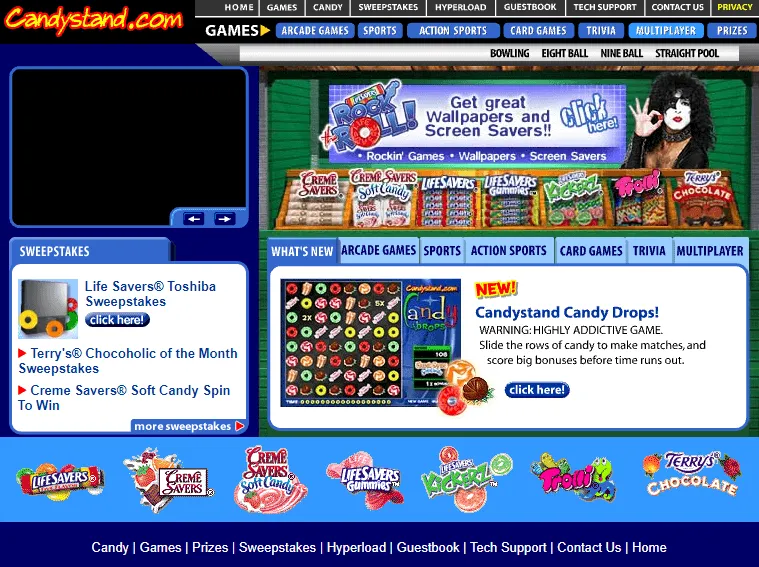 The colorful, engaging interface (back then) made Candystand a destination, not just a website
The tools available now - mobile-optimized HTML5, QR codes on everything, real-time leaderboards, email capture built directly into gameplay - make the playbook dramatically more powerful.
The question isn't whether branded web games work. That case was closed a long time ago.
The question is what your game is.
NakNick builds branded mini-games and gamified campaigns for CPG, DTC, and B2B brands that want to turn boring promotions into playable growth funnels. If you want to see what a game could look like for your brand, let's talk.