
How Trade Show Games Help CPG & DTC Brands Drive Leads and Sales
Most trade show booths fail for one simple reason:
They ask people to care before giving them a reason to.
That is the whole problem.
Brands show up with banners, product claims, and polished pitches, then wonder why attendees keep walking. At a busy CPG or DTC event, nobody is standing around hoping to be sold to. People are tired, distracted, carrying tote bags they already regret, and moving fast.
That is why trade show games work.
Not because the game is the attraction.
Because the game is the excuse.
It gives strangers a reason to stop. It gives staff a reason to talk. And it gives the brand a way to turn foot traffic into real business conversations without feeling like a sales trap.
The Real Job of a Trade Show Game
A good game does four things fast:
- gets attention
- creates interaction
- captures data
- makes the brand memorable
That is the business case.
A booth game is not there to entertain your internal marketing team or win points for creativity. It is there to reduce friction. Friction is what kills booth traffic, kills conversations, and kills follow-up.
The best games are simple enough to understand in seconds and engaging enough to make someone stay for minutes.
That gap matters.
Seconds get attention. Minutes create opportunity.
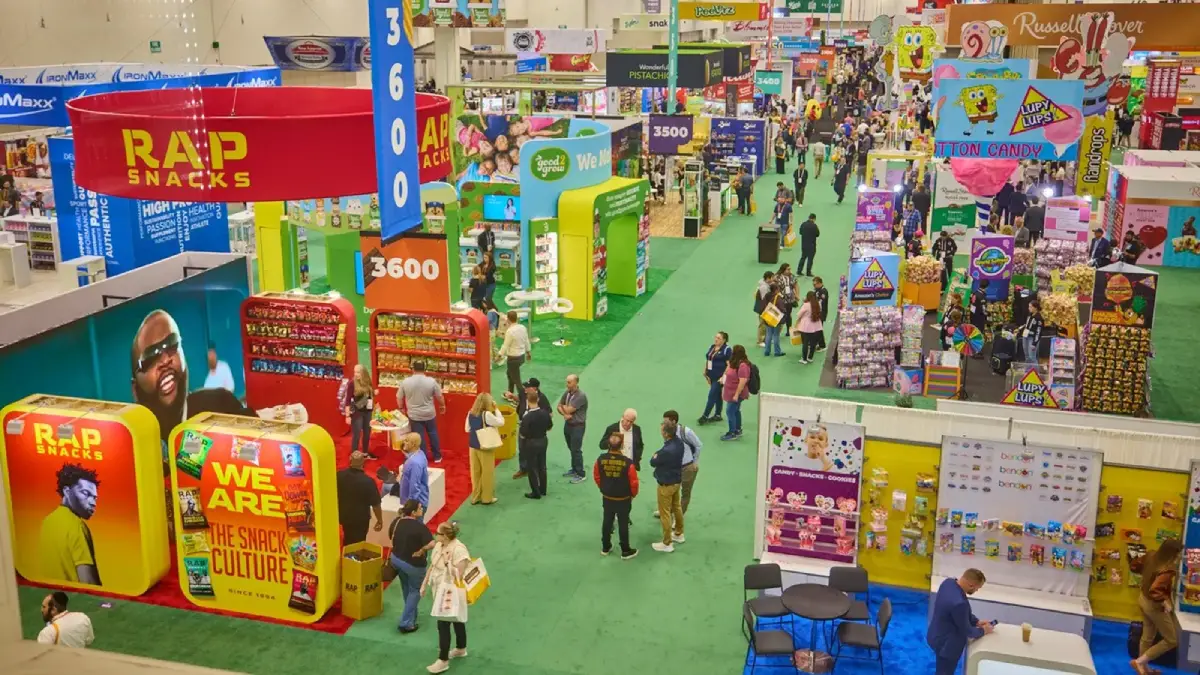
What Changes When a Game Is Involved
At most trade shows, people walk by with “do not make eye contact” energy. Every booth looks the same:
- banner wall
- free pen
- awkward pitch
- a stack of brochures nobody asked for
A game changes that dynamic instantly.
People stop because they want to watch. They stay because they want to play. And once other people are gathering, the booth starts to feel like the place to be.
That is not a small thing.
Crowds create trust. Trust creates curiosity. Curiosity creates conversations. Conversations create pipeline.
Why Trade Show Games Help Win Business
Here is the simplest way to think about it:
| Business Outcome | What the Game Actually Does |
|---|---|
| More booth traffic | Creates a visible reason to stop |
| Better lead capture | Makes contact exchange feel natural |
| Longer dwell time | Keeps people engaged long enough for real conversation |
| Stronger brand recall | Turns a forgettable booth into a memorable experience |
| More follow-up value | Gives sales a reason to reconnect after the event |
That is why games are so effective for CPG and DTC brands specifically.
These brands often rely on personality, speed, and product experience. A good booth game gives all three a place to show up at once.
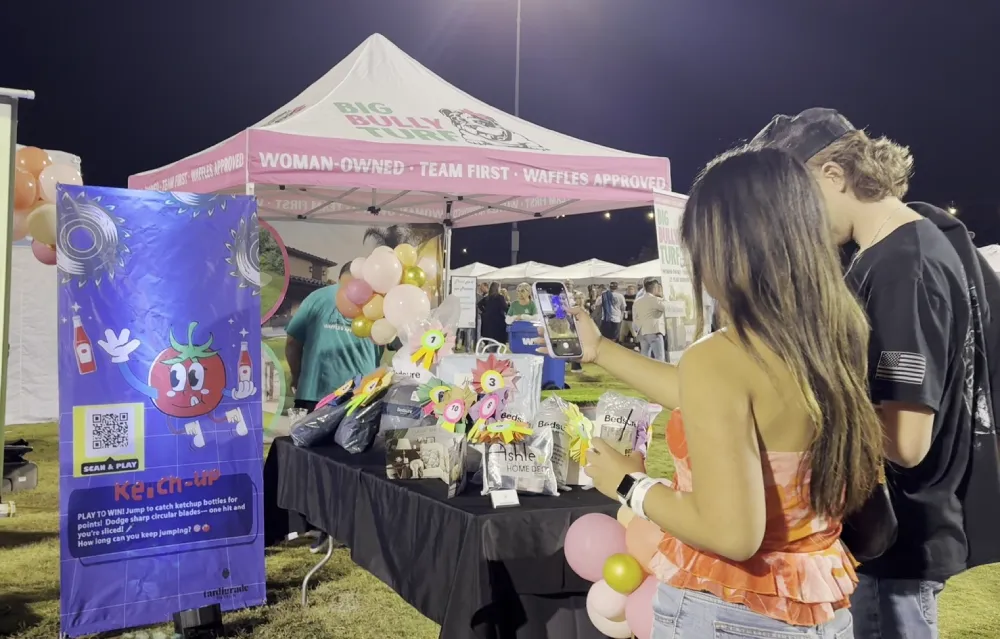 Crowded trade show booth game attracting attendees and generating engagement for a CPG brand.
What Makes a Trade Show Game Work
The best-performing activations are usually not the most impressive ones.
They are the ones people understand immediately.
That means:
- a dead-simple mechanic
- a fast dopamine hit
- visible competition
- a clean lead capture moment
- a reward people actually want
The strongest games usually feel like this:
- spin to win
- beat the score
- tap fast
- catch the product
- beat the clock
- climb the leaderboard
The more effort a booth asks from someone before giving them a payoff, the worse it performs.
Trade shows are not the place for tutorials. They are the place for instant gratification.
Why Some Booth Games Fail
Most bad activations fail for the same reasons.
They are:
- too complicated
- too slow to explain
- attached to weak prizes
- invisible from the aisle
- disconnected from lead capture
- more “marketing campaign” than actual fun
That last one is common.
If the game feels like a corporate training module wearing party clothes, attendees will see right through it.
People do not want homework disguised as entertainment.
They want a quick win, a little competition, and a reason to stay.
The Best Booth Staff Use Games as Conversation Starters
A game is not the endpoint. It is the opener.
Great booth staff do not treat it like a vending machine. They use it to create momentum.
They host the booth like a live experience, not a sales desk.
They:
- narrate the action
- build energy
- celebrate close calls
- make the scoreboard feel alive
- transition naturally into conversation
That is the real art.
The game earns attention. The staff convert attention into business.
That shift matters because it changes the tone from:
“So what does your company do?”
to:
“Tell me more about this brand.”
One feels like a cold interruption. The other feels earned.
What ROI Should You Actually Measure?
A trade show game should never be judged by vibes alone.
Measure outcomes that connect to revenue or future pipeline:
- qualified leads captured
- dwell time at the booth
- repeat booth visits
- QR scans
- email or SMS opt-ins
- coupon redemptions
- meetings booked
- social shares and UGC
- product recall after the event
- post-show follow-up response rates
The bigger question is not:
“Was the game expensive?”
It is:
“Did it help us get remembered, get engaged with, and get into the pipeline at a better rate than a normal booth would have?”
That is the metric that matters.
Why Smaller Brands Often Win
Smaller CPG and DTC brands usually have an advantage.
They are more willing to be fun.
Big brands get slowed down by approvals, compliance, and overthinking. Smaller teams can move faster and lean harder into personality.
That matters at events.
You do not need the fanciest booth.
You need the booth people remember.
That usually means:
- one strong mechanic
- one clear prize
- one obvious CTA
- one memorable brand personality
Attention density beats booth size almost every time.
The Bottom Line
Trade show games work because they flip the equation.
Instead of asking people to care first, they give people something to do.
And in modern marketing, participation beats presentation.
People may forget the booth with the nicest brochure. They remember the booth where people were laughing, phones were out, a leaderboard was climbing, and the brand felt alive.
That is what makes a trade show game more than entertainment.
It turns passive foot traffic into active engagement, and active engagement into business.
At NakNick, we build custom interactive trade show games designed specifically for events, and brand activations — built to stop people in their tracks and turn them into qualified leads. Let's design the experience that makes your next event your best one yet.