
7 Digital Marketing Tactics Working Right Now (That Most Brands Ignore)
So, you're scrolling through LinkedIn. Reading the latest "10 Marketing Trends for 2026" articles. Watching yet another webinar about AI this and automation that.
And in your head, you're probably thinking:
"Everyone's talking about the same things. What's actually working that nobody's mentioning?"
Let me tell you something interesting.
While most brands are fighting over ad inventory and burning budgets on skip-able content, a small group of marketers is quietly getting 73% higher engagement, 3x longer dwell time, and 5:1 ROI using something refreshingly simple.
They're making marketing fun.
Not every marketing touchpoint needs to be an ad. Some should be games.
The Uncomfortable Truth About Digital Marketing Today
Here's what nobody wants to admit:
People don't want to be marketed to. They want to be entertained, engaged, and rewarded.
Yet most marketing budgets still allocate 90%+ to formats people actively avoid:
- Skipped YouTube ads
- Scrolled-past Instagram posts
- Unopened email newsletters
- Banner blindness on websites
Meanwhile, the brands winning right now are doing something different. They're not interrupting what people are interested in. They're becoming what people are interested in.
And the data backs this up.
The Proof: 7 Tactics Driving Real Results
| Tactic | Impact & Results |
|---|---|
| Trade Show Gamification | 73% higher booth engagement vs. static displays; 3x longer dwell time at interactive booths |
| Packaging QR Games | 5x repeat engagement vs. traditional loyalty programs; voluntary data collection up 40%+ |
| Gamified Lead Capture | Lead forms convert 40% better than badge scans; higher quality leads through self-selection |
| Brand Recall Through Play | 85% better brand recall after 30 days compared to passive event experiences |
| Shareable Score Screens | 3x organic shares vs. standard social posts; players become micro-influencers |
| Experience-Over-Swag | 5:1 ROI through qualified leads; games live on post-event for continued engagement |
| Historical Advergames | Chex Quest drove 248% sales lift; 6M copies distributed in 6 weeks with zero ad spend |
The numbers don't lie. Fun isn't just nice—it's profitable.
Why These Tactics Work (The Psychology)
So, let's break down the "why." These tactics aren't random. They tap into specific psychological triggers that make people want to engage.
1. Voluntary Engagement
When someone chooses to scan a QR code or play a game, they're opting in. That voluntary action creates a much stronger brand association than forced marketing.
They're not being sold to. They're choosing to interact.
2. The Fun-First Principle
A CPG brand we worked with slapped a QR code on their boxes that led to a branded mini-game (no download, browser-based). Customers who scanned had 5x repeat engagement vs. traditional loyalty programs.
Why? Because the game was genuinely fun first, promotional second.
When you're having fun, you're not thinking "this is an ad." You're thinking "this is awesome!"
3. Competition & Social Proof
Add a leaderboard and suddenly people want to:
- Beat their friends
- Beat strangers
- Come back later
Competition keeps engagement alive long after the first interaction.
4. Instant Gratification
Games provide immediate feedback and rewards. The faster the reward, the stronger the engagement.
Instead of "download our whitepaper," try "beat this score and unlock a discount." Lead quality improves dramatically because people self-select based on actual engagement, not just curiosity.
5. Memory Through Experience
People remember how you made them feel, not your spec sheet.
Event attendees remember brands with interactive experiences 85% better after 30 days compared to static displays.
Fun creates positive brand associations that last.
Real-World Examples That Prove It Works
Chex Quest (1996) - The Original Viral Game
Everyone's chasing the next big thing, but Chex Quest still holds lessons:
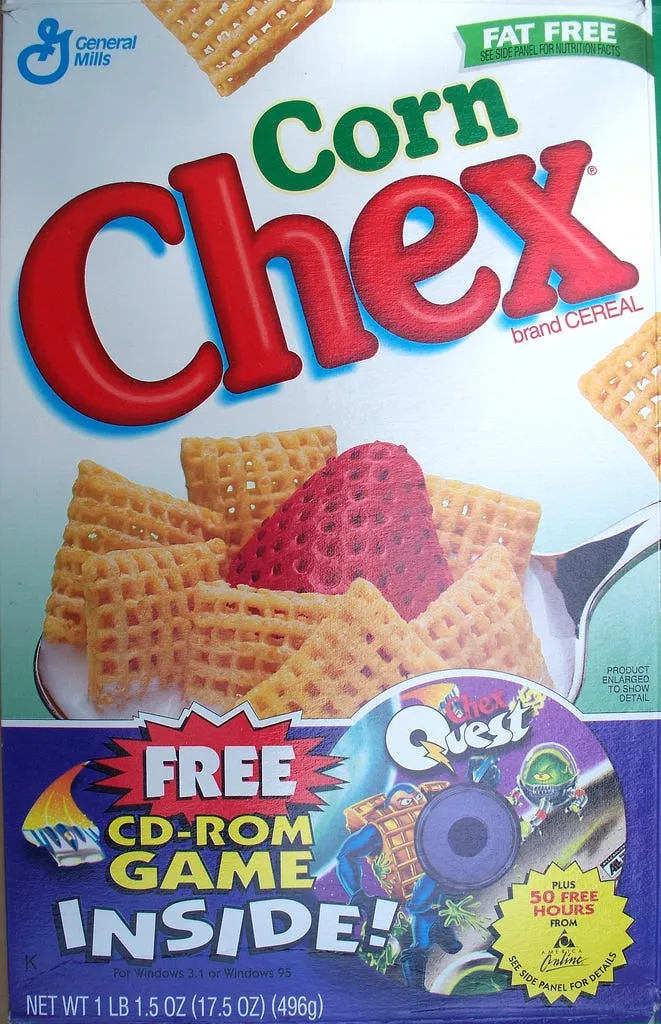
- 6 million copies distributed in cereal boxes in 6 weeks
- 248% sales lift
- Zero traditional ad spend on the game itself
The product was the campaign. Today that looks like QR codes on packaging, AR experiences, or browser games tied to promotions.
The medium changes, the principle doesn't: make your marketing something people want to interact with.
Trade Show Transformation
A client was spending $50k on event swag that ended up in landfills. We redirected half that budget into a custom mini-game for the same event.
Result? 5:1 ROI through qualified leads, plus the game lived on post-event for continued engagement.
Swag gets thrown away. Memories (and high scores) don't.
The Shareability Multiplier
We built a promo game where the end screen showed your score + a branded challenge message ("Can you beat this dude's score?").
Organic shares increased 3x vs. their standard social posts. Each player became a micro-influencer without us paying a cent.
The trick? The game had to be genuinely fun first, promotional second. If it feels like an ad, nobody shares it.
The Modern Application
While the tactics above span decades, the principles remain the same. Here's how to apply them today:
Mobile-First Games
Today's equivalent of 2-5 minute time-killers. No downloads. Instant play via QR code. 95% of event attendees have smartphones—meet them where they are.
Social Integration
Built-in sharing and competition features. Leaderboards that reset daily. Challenges that encourage repeat visits.
Data Collection
Understanding user behavior to improve experiences. Voluntary data collection through gameplay converts 40% better than traditional forms.
Cross-Platform Play
Seamless experiences across devices. Start at the booth, continue at home, compete with friends later.
Physical + Digital Bridge
QR codes connect real-world touchpoints to digital experiences. Every surface becomes a game controller:
- Booth signage
- Product packaging
- Coffee cups
- Receipts
- Wristbands
- Napkins
What This Teaches Us About Modern Marketing
| Lesson | Application |
|---|---|
| Quality Over Quantity | One great branded game is worth a thousand banner ads |
| Emotional Connection | Fun creates positive brand associations that last |
| Voluntary Engagement | People choose to engage with games, making interactions more valuable |
| Brand Integration | The brand should enhance the experience, not interrupt it |
| Experience > Swag | Invest in memories, not disposable merchandise |
| Shareability Built-In | Design for virality from day one |
| Data Through Play | Collect insights while players have fun |
Why This Matters for Your Business Today
The bottom line?
Marketing that feels like marketing gets ignored.
Marketing that feels like fun gets shared, remembered, and acted upon.
At trade shows, gamification turns foot traffic into interactions.
On packaging, QR games transform products into experiences.
In campaigns, shareable scores turn customers into advocates.
Instead of interrupting your audience, you're inviting them to play.
Your Turn to Play
So, the data's in. The case studies are closed. The question isn't whether gamification works.
The question is, what's your game?
Are you ready to:
- Turn your trade show booth into an engaging machine?
- Transform product packaging into a playground?
- Turn every QR scan into a lead, a customer, or a fan?
- Build brand loyalty through fun rather than interruption?
At NakNick, we specialize in creating branded games that follow this exact playbook—engaging, memorable, and effective. From trade show activations to packaging QR games to full advergame campaigns, we build experiences that people actually want to engage with.
Ready to level up your marketing strategy?
Let's create a game that will make your audience as excited to engage with your brand as millions were to play Chex Quest, Candystand, and Cool Spot.
👉 Book a 15-minute Game Concept Call and get a custom game idea for your next campaign
Let's turn your marketing from something people tolerate into something they love. 🎮
Contact Us
Ready to transform your marketing into a game worth playing? Reach out to our team today.